
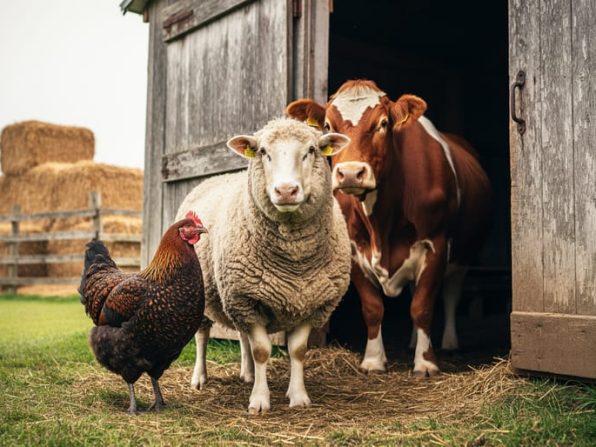
Rare breed conservation is the deliberate effort to protect and restore endangered livestock and poultry breeds that have been pushed to the brink of extinction by industrial agriculture. In Canada, more than 30 heritage breeds of cattle, pigs, sheep, goats, and chickens are classified as at risk, with some populations numbering fewer than 200 breeding animals worldwide. These breeds represent centuries of careful selection by farmers who shaped genetics to thrive in specific climates, resist local diseases, and produce exceptional meat, wool, or eggs without the intensive inputs modern hybrids demand.
The work happens on farms, not in gene banks. Unlike wildlife conservation that relies on protected habitats, rare breed preservation depends on farmers raising these animals in working agricultural systems. Every lamb born, every clutch of eggs hatched, every heritage pig brought to market contributes directly to pulling a breed back from the edge. This creates a unique model where conservation and commerce intersect: buying a heritage turkey for your table or wool from a rare sheep breed directly funds the breeding programs keeping those genetics alive.
The stakes extend beyond nostalgia. Heritage breeds carry genetic diversity that commercial agriculture has largely abandoned in favor of a handful of high-output hybrids. When disease, climate shifts, or market disruptions threaten these narrow genetic lines, rare breeds offer proven alternatives already adapted to challenging conditions. Canadian farmers rediscovering breeds like the Chantecler chicken or Canadienne cattle aren’t just preserving history. They’re maintaining a genetic insurance policy and building resilient food systems rooted in breeds that helped shape this country’s agricultural identity.
What We Mean by Rare Breed Conservation
Rare breed conservation is the intentional effort to protect and increase populations of livestock breeds that face the risk of extinction. Unlike wildlife conservation, where animals are returned to nature, rare breed conservation depends on farmers choosing to raise these animals, maintain their genetic integrity, and breed them according to traditional standards. It’s a partnership between dedicated breeders, conservation organizations, and consumers who value what these animals represent.
A breed becomes rare through a predictable pattern. When agricultural practices shift toward industrial-scale production, farmers adopt breeds optimized for specific commercial traits, fast growth, high milk yield, or uniform carcasses. Heritage breeds that excel in hardiness, flavor, or multi-purpose use lose market share. As fewer farmers raise them, breeding populations shrink. Without intervention, genetic diversity narrows, and eventually the breed disappears entirely.
Conservation organizations track this decline through population monitoring and categorize breeds using conservation priority list categories that reflect how close a breed is to extinction. These classifications help prioritize conservation efforts and alert farmers and consumers to breeds needing support.
- Critical
- Fewer than 500 breeding animals remain globally, or the breed exists in only one small geographic region. Immediate action is needed to prevent extinction.
- Threatened
- Between 500 and 1,000 breeding animals exist worldwide. The breed requires active conservation programs to stabilize and grow its population.
- Recovering
- Previously endangered breeds showing population growth thanks to conservation efforts. They still need support to ensure long-term viability.
- Heritage Breed
- Livestock breeds that developed before industrial agriculture, selected over generations for traits like hardiness, longevity, and adaptability to local conditions rather than maximum commercial output.
What separates heritage livestock from commercial breeds isn’t nostalgia, it’s biology and purpose. Heritage breeds carry genetic traits developed over centuries for specific climates, terrains, and farming systems. A Chantecler chicken thrives in Quebec winters. A Canadian Horse hauls logs through Maritime forests. These breeds weren’t designed in laboratories; they evolved through generations of farmers selecting animals that survived, produced, and worked under real-world conditions. Commercial breeds, by contrast, are optimized for controlled environments where temperature, feed, and healthcare are managed intensively. Both have value, but only heritage breeds maintain the genetic toolkit that might prove essential when conditions change.
The Living Library We’re About to Lose
Genetic Diversity as Insurance
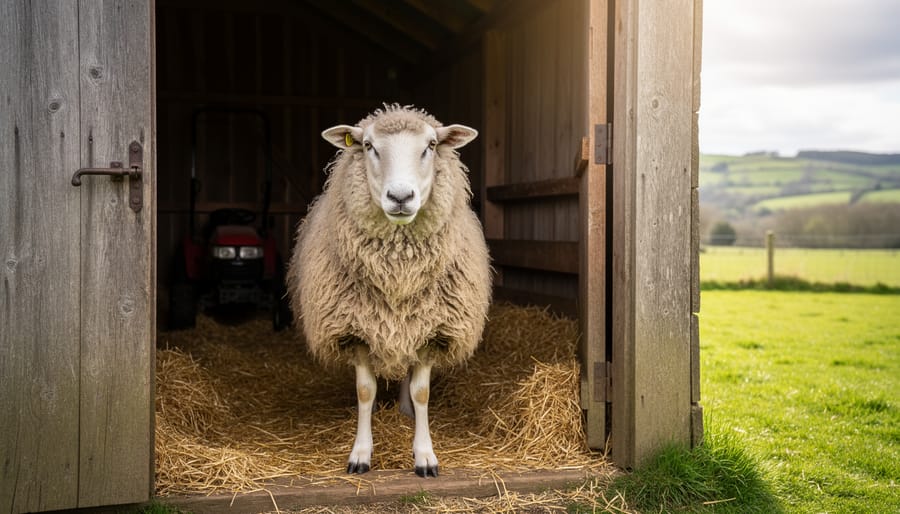
Rare breeds function as living vaults of genetic potential we haven’t yet needed to unlock. When commercial breeding narrows livestock down to a handful of productive lines optimized for current conditions, we’re essentially betting our entire agricultural future on today’s environment staying the same. That’s a losing wager.
Heritage breeds carry gene variants that might seem irrelevant now but could prove essential when circumstances shift. A Canadian Chèvre goat’s ability to thrive on marginal forage might matter little in today’s grain-abundant operations, but becomes invaluable when feed costs spike or drought limits pasture quality. The Newfoundland pony’s tolerance for harsh maritime winters contains genetic information commercial horse breeds simply don’t have, because those traits were bred out generations ago in favour of size and speed.
Climate volatility makes this genetic reservoir increasingly critical. As temperature patterns shift and extreme weather becomes routine, we’ll need livestock that can handle conditions their ancestors never faced. Rare breeds maintained in varied environments across Canada have adapted to local challenges, developing resilience mechanisms that intensive breeding operations never selected for. Some heritage chickens, for instance, maintain natural disease resistance that’s been lost in high-production commercial lines focused purely on egg output or growth rates.
This concept of genetic diversity as resilience extends beyond individual farm survival to food system security. When a new poultry disease emerges or shifting consumer preferences suddenly favour different meat qualities, having a diverse genetic toolbox means we’re not starting from scratch. We’re drawing from breeds that already possess the traits we suddenly need, rather than desperately trying to engineer them into homogeneous commercial stock.
Cultural Heritage on Four Legs
Rare breeds carry stories that stretch back generations, stories of pioneering settlers who brought livestock across oceans, of farmers who shaped breeds to match harsh Canadian winters, and of communities whose identities became intertwined with the animals they raised. When a rare breed disappears, we lose more than genetics; we lose a living connection to the people who built Canada’s agricultural landscape.
The Canadienne cow, developed by French colonists in the 1600s, became synonymous with Quebec’s rural identity. These tough, adaptable cattle weren’t just farm equipment, they represented survival, resourcefulness, and cultural continuity. Similarly, heritage breed goats and sheep often trace their lineages to specific immigrant communities who needed animals that could thrive in Canada’s demanding climate while providing milk, meat, and fibre using traditional methods.
Indigenous agricultural practices are equally embedded in certain heritage livestock. While First Nations, Métis, and Inuit communities traditionally focused on wild game and fish, the integration of specific livestock breeds into indigenous farming operations created unique conservation partnerships that honour both animal husbandry and cultural practices.
Regional farming traditions shaped distinct breed characteristics over centuries. Maritime breeds developed tolerance for coastal weather. Prairie breeds needed drought resistance and foraging ability. These adaptations weren’t accidents, they were the result of farmers who knew their land intimately and selected animals that embodied local wisdom.
When we conserve rare breeds, we preserve the ingenuity, resilience, and cultural memory of the farmers who came before us.
How Rare Breed Conservation Actually Works
The Role of Conservation Organizations
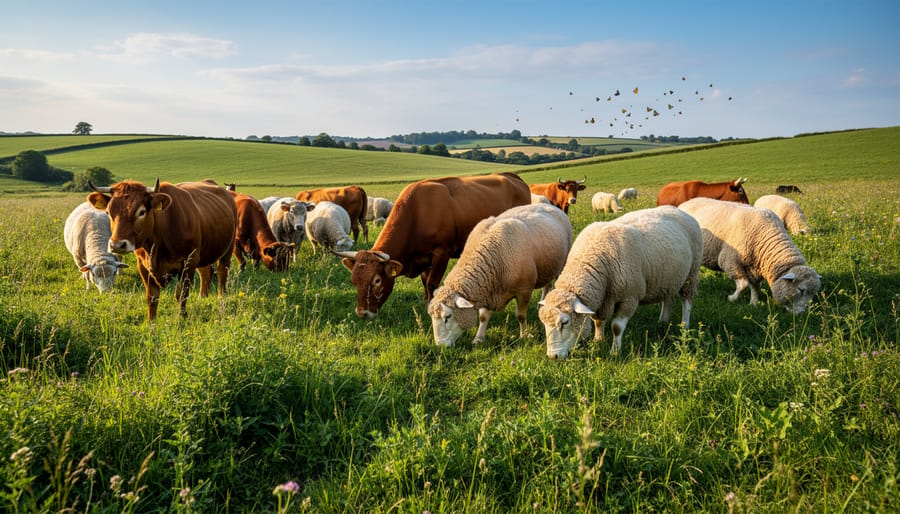
Conservation organizations serve as the backbone of rare breed preservation, transforming scattered individual efforts into coordinated national movements. Rare Breeds Canada maintains the country’s authoritative Heritage Livestock Canada conservation list tracking population numbers and risk levels for each breed. This database isn’t just record-keeping, it determines which breeds receive urgent attention and funding, guides breeding recommendations to maintain genetic diversity, and helps farmers locate compatible breeding stock across provinces.
Beyond documentation, these groups build the infrastructure that makes conservation practical. They organize regional breed associations, run mentorship programs pairing experienced heritage breeders with newcomers, and negotiate group insurance rates that make rare breeds financially viable. Their educational work reaches from elementary classrooms to agricultural colleges, ensuring knowledge about why rare goats thrive in challenging conditions doesn’t disappear with retiring farmers.
Perhaps most critically, conservation organizations amplify what individual farmers can’t achieve alone: policy advocacy for heritage livestock protections, promotion of rare breed products to high-end markets, and public awareness campaigns that shift consumer demand. When a breed’s population drops below critical thresholds, these groups mobilize emergency response, identifying remaining breeding stock, coordinating strategic pairings, and sometimes arranging rescue placements before genetic lines vanish entirely.
Farmers as Conservation Heroes
Every time a farmer chooses to raise a heritage breed instead of a commercial variety, they’re making a conservation decision. While organizations provide structure and support, the real work of keeping rare breeds alive happens on farms across Canada, in barns, pastures, and breeding pens where individual farmers commit to raising animals that demand more attention, take longer to mature, and often produce lower volumes than their industrial counterparts.
These farmers become living links in a chain stretching back generations. They learn the temperament quirks of Canadian Cattle, master the seasonal breeding patterns of Chantecler chickens, and discover which feed combinations work best for slower-growing Berkshire pigs. This isn’t abstract preservation, it’s daily, hands-on stewardship that keeps genetic lines viable and breed characteristics intact.
The work requires meticulous record-keeping. Conservation farmers track pedigrees, monitor inbreeding coefficients, and coordinate breeding decisions with other keepers of the same breed to maintain genetic diversity. They might drive hours to find an unrelated breeding animal, or ship semen across provinces to strengthen their flock’s genetics. Many participate in breed associations, share data with conservation registries, and mentor newcomers to ensure knowledge transfers alongside the animals themselves.
What makes these farmers heroes isn’t just their willingness to choose harder paths, it’s their understanding that the breeds in their care represent irreplaceable biological resources. They’re banking genes that future generations may desperately need while running viable farms today. They prove that conservation and production aren’t opposites but partners in a more resilient agricultural future.
The Economic Case for Saving Rare Breeds
Premium Markets and Discerning Consumers
Heritage breed products command premium prices because discerning buyers recognize qualities that industrial agriculture can’t replicate. Restaurant chefs building farm-to-table menus seek out rare breed pork with superior marbling and distinctive flavor profiles that set their dishes apart. The difference between commodity chicken and a heritage Chantecler isn’t subtle, it’s the kind of quality that changes how a dish is remembered.
Artisan cheese producers have rediscovered that milk from rare breed cattle and sheep carries unique fat and protein ratios that create exceptional cheeses. A cheesemaker working with Canadian sheep breeds might achieve textures and flavors impossible with Holstein milk, justifying prices that reflect both quality and scarcity.
Direct-to-consumer sales through farmers’ markets and online platforms let rare breed farmers capture this premium without middlemen. When customers understand they’re buying meat from a Newfoundland pony or wool from a heritage sheep breed, they’re not just purchasing a product, they’re investing in living agricultural history.
This market reality transforms conservation from charity into viable business. Farmers who maintain rare breeds aren’t sacrificing profit for principle. They’re meeting genuine demand from buyers who value craftsmanship, flavor, and authenticity enough to pay what heritage livestock products are actually worth.
Natural Advantages of Heritage Livestock
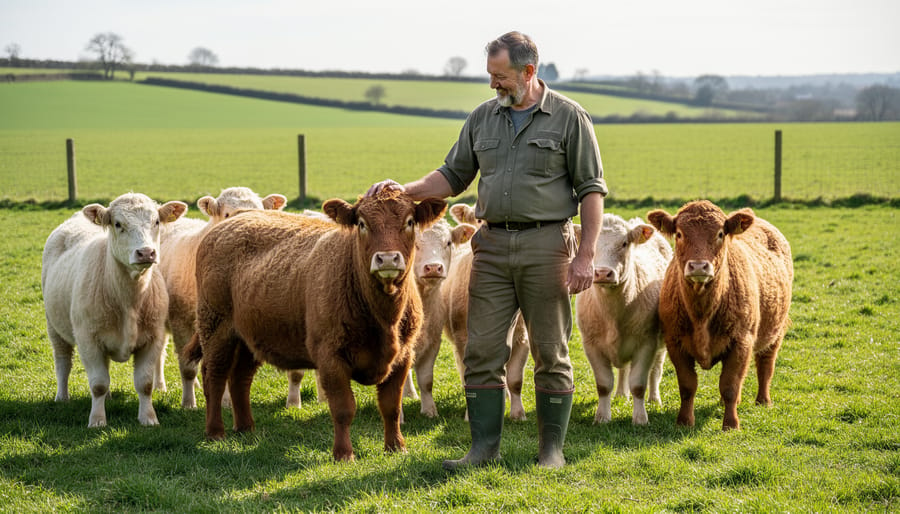
Heritage breeds often excel in exactly the conditions where modern breeds struggle, pasture-based systems, variable weather, and management approaches that rely on animal instinct rather than intensive inputs. Canadienne cattle, for instance, evolved through Quebec’s harsh winters without barns, developing thick coats and efficient feed conversion that make them ideal for grass-finishing operations in northern climates. Their smaller frames mean less stress on pasture and reduced feed costs compared to larger commercial breeds.
Many rare breeds possess what farmers call “natural thrift”, the ability to maintain condition on forage that would leave modern livestock thin. Scottish Highland cattle thrive on rough browse that other breeds ignore. Heritage pigs like Tamworth have strong foraging instincts and the leg structure to cover ground, making them perfect for woodland or rotational grazing systems where confinement breeds would flounder.
Disease resistance represents another practical advantage. Breeds developed before antibiotics and modern veterinary medicine had to survive on their own immune systems. Gulf Coast Native sheep, for example, show remarkable resistance to parasites that plague other breeds in humid regions. For organic farmers or those reducing pharmaceutical inputs, these built-in resistances translate directly to lower mortality rates and veterinary costs, advantages that balance sheets recognize even when breed registries don’t.
Success Stories: Breeds Coming Back from the Brink
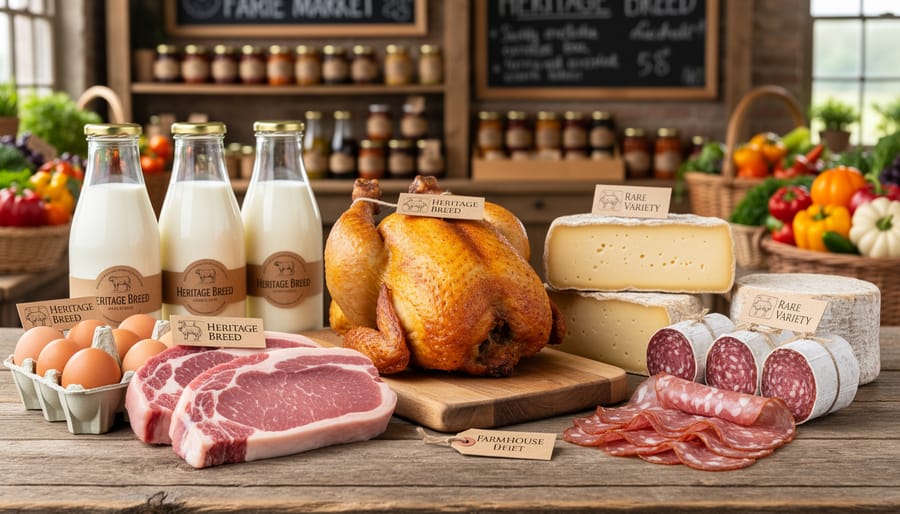
Nothing motivates conservation action quite like proof that it works. Across Canada, several rare breeds have pulled back from the edge of extinction thanks to dedicated breeders, supportive consumers, and coordinated conservation efforts.
The Canadian Horse, Quebec’s national breed, provides one of the most dramatic recovery stories. By the 1970s, fewer than 400 individuals remained of this hardy breed that once numbered in the hundreds of thousands. Facing genetic bottlenecks and dwindling interest, the breed seemed destined for museum displays rather than working farms. Today, through registry management, breeder cooperation, and renewed appreciation for their versatility, the population has rebounded to over 6,000 registered animals. The breed now thrives in driving competitions, recreational riding, and even serves as a symbol of Quebec’s agricultural heritage.
The Chantecler chicken, Canada’s only chicken breed developed domestically, faced near-extinction in the 1970s with fewer than a dozen breeding birds remaining. Small-scale poultry keepers who valued the breed’s cold-hardiness and dual-purpose qualities began deliberate recovery efforts. Patient breeding programs gradually expanded the genetic base while maintaining breed standards. Now the Chantecler appears at agricultural fairs, populates backyard flocks coast to coast, and represents a genuine alternative for farmers seeking winter-hardy birds that thrive without heated coops.
The heritage goat recovery story includes breeds like the Canadian Arcott goat, which nearly vanished before breeders recognized their exceptional mothering abilities and browse tolerance. Coordinated efforts to document bloodlines, connect scattered breeders, and demonstrate their practical advantages on diverse terrain have steadily increased numbers.
These recoveries weren’t accidents. They happened because people chose to act, maintaining registries during lean years, breeding for quality over quantity, educating new farmers about heritage advantages, and creating markets that rewarded conservation-minded choices. Each success proves that rare breeds can return from critically low numbers when communities commit to their survival.
How You Can Support Rare Breed Conservation
Supporting rare breed conservation doesn’t require a farm or specialized expertise. Whether you’re a consumer, educator, prospective farmer, or simply someone who cares about agricultural biodiversity, you can make a tangible difference.
For Consumers
The most immediate impact comes through your purchasing choices. Seek out heritage breed products at farmers’ markets, specialty butchers, and farm-direct operations. When you choose Canadian Chantecler chicken, Canadienne beef, or Newfoundland pony fiber products, you’re creating economic incentive for farmers to maintain these breeds. Ask questions at markets about breed origins, your interest signals demand. Share these products with friends and family, explaining the conservation story behind them. Consider joining a meat or fiber CSA that specifically works with heritage livestock.
For Aspiring and Current Farmers
Start with a single heritage breed that matches your climate, land, and goals. Organizations like Rare Breeds Canada maintain breed directories that help you connect with reputable breeders and mentors. Begin small, even three breeding females can contribute meaningfully to a breed’s genetic pool if managed thoughtfully. Register your animals with the appropriate breed association, maintaining accurate records that preserve genetic information. Network with other heritage breed farmers who can share practical knowledge about husbandry specifics. If you raise other livestock, consider adding heritage breeds gradually rather than attempting a complete operation overhaul.
For Educators and Advocates
Integrate rare breed conservation into agriculture, biology, or environmental science curricula. Arrange farm visits where students can meet heritage livestock and understand their unique qualities. Share success stories on social media, highlighting specific breeds and the farmers who champion them. If you support heritage goats or other breeds, your advocacy helps spread awareness beyond agricultural circles.
For Everyone
Donate to or volunteer with conservation organizations that maintain registries and educational programs. Attend agricultural fairs and heritage livestock exhibitions, where your presence validates the work. Even simply learning breed names and sharing what makes them special plants seeds that grow into broader conservation awareness.
The future of Canada’s agricultural heritage isn’t being decided in boardrooms or government offices. It’s being shaped right now in the choices farmers make about which animals to raise, in the purchasing decisions consumers make at farmers’ markets, and in the conversations happening around dinner tables across the country.
Every rare breed we lose takes with it genetic resilience we can’t recreate, traditional knowledge we can’t recover, and a piece of our collective story we can’t rewrite. But here’s the encouraging truth: conservation doesn’t require grand gestures or unlimited resources. It happens when a farmer chooses to add a heritage breed to their operation. It happens when a restaurant features Canadian Chantecler chicken on the menu. It happens when a parent teaches their child why our agricultural past matters for our food future.
The breeds that have survived this long did so because people cared enough to keep them going through challenging times. Now it’s our turn to be that link in the chain. Whether you raise livestock, buy food, teach students, or simply appreciate the richness of Canada’s farming traditions, you have a role to play.
Start where you are. Visit a heritage farm. Try a product from a rare breed. Share what you learn. Support the breeders doing this essential work. The rare breeds that future generations inherit depend entirely on what we choose to do today.