
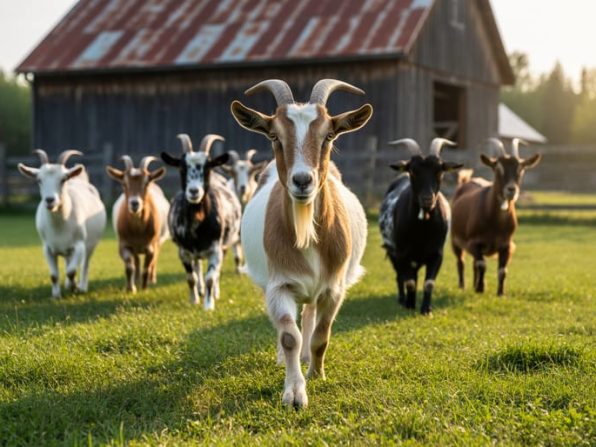
Heritage breed goats are purebred livestock strains that developed over centuries to thrive in specific regional conditions before the mid-20th century shift to commercial breeding programs. These animals stand apart through their genetic diversity, natural disease resistance, and ability to flourish on pasture-based systems with minimal intervention. For Canadian farmers weighing their options in 2026, heritage goats offer proven hardiness for our climate, strong maternal instincts that reduce labor, and growing market demand from consumers seeking ethically raised, flavor-rich meat and artisanal dairy products.
Unlike commercial breeds engineered for maximum production in controlled environments, heritage goats evolved through generations of natural selection and careful stewardship by farming families. A Canadian Angora from the 1940s or a Spanish goat descended from colonial stock carries genetic traits that simply don’t exist in modern industrial lines: the ability to birth unassisted, forage on marginal land, resist parasites, and convert rough browse into premium products. These aren’t romantic notions but measurable advantages that translate to lower veterinary bills and feed costs.
The choice to raise heritage breeds also connects you to a vital conservation movement. Many of these goats face critical population declines, yet they represent irreplaceable genetic resources our agricultural future may desperately need. By selecting heritage stock for your farm, you’re making a sound business decision while safeguarding living pieces of Canadian agricultural history for the next generation.
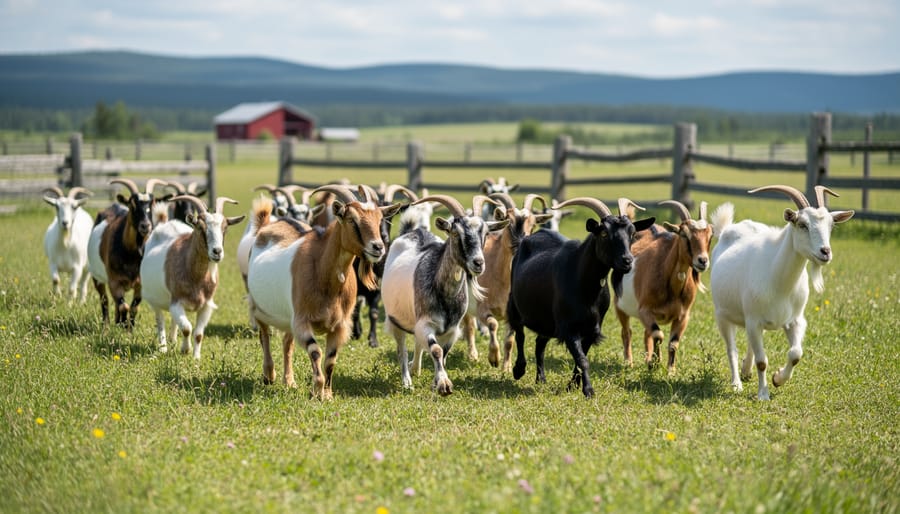
What Defines a Heritage Breed Goat
A heritage breed goat isn’t simply an old variety that’s been around for decades. These animals meet specific standards that set them apart from the commercial hybrids dominating modern agriculture. Understanding what qualifies a goat as heritage helps farmers recognize the distinct value these breeds bring to their operations.
The Heritage Livestock Canada criteria establishes clear benchmarks. A breed must have been present in Canada prior to 1970, demonstrating a documented history within our agricultural landscape. This timeline ensures the breed developed traits suited to Canadian conditions through generations of selection by farmers working with real challenges, not laboratory conditions.
Genetic distinctness matters just as much as age. Heritage goats maintain recognizable breed standards that haven’t been diluted by crossbreeding with commercial lines. They breed true to type, producing offspring that consistently reflect their parents’ characteristics. This genetic integrity comes from closed or carefully managed breeding populations where farmers prioritized maintaining traditional traits rather than maximizing single-trait production metrics like milk volume alone.
Traditional breeding practices emphasize the whole animal rather than isolated production traits. Heritage breed selection historically valued hardiness, longevity, mothering ability, and adaptability alongside productivity. Farmers needed goats that could survive harsh winters, raise kids without intervention, and thrive on whatever forage the land provided. These multi-generational selection pressures created animals fundamentally different from breeds engineered in controlled environments for maximum short-term output.
Population size factors into heritage status too. Many heritage goats have small breeding populations in Canada, making their conservation important for maintaining genetic diversity. These aren’t rare because they failed commercially, they’re rare because industrial agriculture abandoned them for specialized breeds that require intensive management.
The Heritage Goat Breeds of Canada
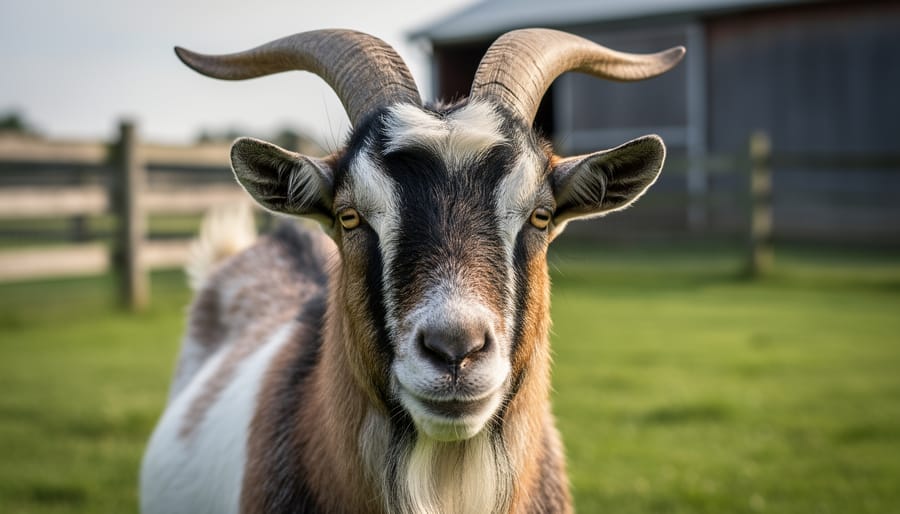
Canadian Goat Breeds with Historical Significance
Canadian agricultural history holds a surprising scarcity of goat breeds that originated entirely on Canadian soil, a stark contrast to cattle or sheep heritage. No goat breed developed exclusively within Canada’s borders has achieved widespread recognition or conservation status. This absence reflects the nation’s historical emphasis on other livestock species and the relatively late arrival of specialized goat farming compared to Europe or the Middle East.
However, certain breeds established deep roots in specific Canadian regions through generations of continuous breeding and adaptation. The French Alpine goat, brought by Quebec settlers in the 1600s and 1700s, became integral to habitant farming life along the St. Lawrence River valley. These goats provided sustenance through harsh winters when other livestock struggled, their milk supporting families who lacked access to dairy cattle. By the late 1800s, regional populations had adapted to Quebec’s climate through selective breeding by farmers who prioritized cold tolerance and thriftiness over milk volume.
Similarly, Toggenburg goats arrived with Swiss and German immigrants settling Ontario and the Prairies in the mid-1800s. Small family farms relied on these brown-coated, medium-sized animals as backyard dairy producers. Their bloodlines remained relatively isolated in rural communities for decades, creating distinct regional types that differed from European Toggenburgs. These populations represent living connections to immigrant farming traditions that shaped Canada’s agricultural landscape before industrialization transformed livestock production.
Heritage Breeds from Immigrant Farming Traditions
Many of Canada’s heritage goats arrived with immigrant families who packed seeds, tools, and livestock bloodlines alongside their dreams of a new life. These animals became woven into the fabric of regional agriculture, adapting to Canadian conditions while preserving the traits that made them valuable in their homelands.
The Nubian goat exemplifies this pattern. British and American settlers brought these distinctive, Roman-nosed goats to Canada in the early 1900s. Nubians offered rich, high-butterfat milk that stood apart from the lighter yields of common dairy goats. Their tolerance for heat made them surprisingly adaptable to southern Ontario summers, while their vocal, social nature endeared them to families managing mixed farms. Today’s heritage Nubian populations maintain genetic lines distinct from modern commercial strains bred strictly for maximum milk volume.
Boer goats represent a more recent but equally significant immigration story. South African farmers developed this meat breed over generations of selection for hardiness and maternal ability. When Boers reached Canada in the 1990s, they proved exceptionally suited to extensive grazing systems and harsh winters. Foundation imports established bloodlines that now form part of Canada’s heritage livestock landscape.
Each immigrant breed carried farming knowledge encoded in its genetics, drought tolerance from Mediterranean climates, parasite resistance from humid regions, foraging skills from mountainous terrain. These characteristics, refined over centuries elsewhere, became Canadian assets when the animals’ descendants faced our own environmental challenges.
Natural Hardiness and Adaptability
Heritage goats didn’t survive centuries of Canadian winters by accident. These animals developed their toughness through generations of real-world selection pressure, not controlled breeding programs optimized for maximum production under perfect conditions. When a farmer in rural Ontario loses power during an ice storm, or a Quebec homesteader faces a late spring blizzard, heritage goats continue eating, kidding, and thriving while their commercial counterparts require emergency intervention.
The adaptability starts with their coat. Heritage breeds like the Canadian grow dense winter undercoats that insulate against temperatures well below freezing, then shed naturally when spring arrives. They regulate their own comfort without heated barns or specialized facilities. Their hooves, hardened through diverse terrain, resist hoof rot and require less frequent trimming than breeds raised exclusively on concrete or level pasture.
Disease resistance sets heritage goats apart even more dramatically. Commercial breeds, bred for rapid growth and high milk yields, often sacrifice immune function for production traits. Heritage goats maintain robust immune systems because survival, not maximum output, shaped their genetics. They show natural resistance to common parasites, reducing the need for frequent deworming protocols. Their slower growth rates mean less metabolic stress and fewer of the production-related health issues that plague high-output animals.
Their foraging flexibility proves equally valuable. Heritage breeds thrive on browse that commercial goats reject: tree bark, woody shrubs, rough grasses, and even invasive plants like buckthorn or multiflora rose. They extract nutrition from marginal land that would otherwise sit idle or require costly clearing. This adaptability means farmers can raise productive animals without importing expensive grain or premium hay, the heritage goat’s rumen evolved to handle whatever the landscape offered, and that biological inheritance remains intact today.
Superior Maternal Instincts and Natural Husbandry
Heritage breed goats retain maternal behaviors that commercial breeding programs often overlook in favor of production metrics. These does kid with minimal assistance, clean their newborns promptly, and establish nursing within the first critical hour, behaviors that directly reduce mortality and farmer intervention.
A San Clemente doe, for instance, typically seeks a sheltered spot, delivers unassisted, and immediately bonds with her kids. Compare this to high-production breeds where dystocia rates climb and colostrum intake becomes a management puzzle. Heritage breeds evolved under conditions where weak maternal instinct meant dead offspring, so natural selection preserved does that could raise twins or triplets without help.
These goats also demonstrate better herd integration of young stock. Kids learn foraging patterns, shelter-seeking, and predator awareness by following experienced does rather than requiring segregated management. This behavior cuts labor during the transition from bottle feeding to pasture integration, a time-consuming phase with more intensively managed breeds.
The benefits extend beyond kidding season. Heritage does rarely reject kids, even in harsh weather, and maintain protective vigilance without the nervousness that causes trampling or abandonment in confined systems. Their calm temperament around humans means farmers can observe and monitor without triggering stress responses that disrupt maternal care.
For operations running lean on labor, these traits translate to tangible savings. Fewer middle-of-the-night barn checks, reduced bottle feeding, and lower kid mortality mean heritage goats essentially manage the next generation themselves. It’s husbandry that works with animal instinct rather than constantly compensating for its absence, a distinction that matters when you’re juggling a dozen other farm tasks during spring kidding.
Foraging Ability and Land Management
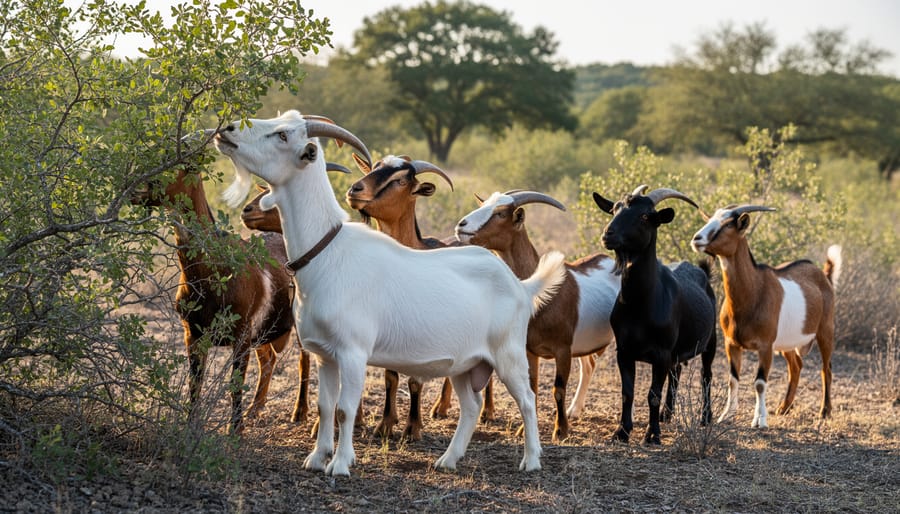
Heritage goats demonstrate exceptional browsing capabilities that make them invaluable partners in sustainable land management. Unlike commercial dairy breeds selected primarily for high milk production on controlled diets, heritage goats retain the natural foraging instincts that allowed their ancestors to thrive on marginal land with minimal human input. These breeds actively seek out woody browse, preferring leaves, bark, and brush over conventional pasture grasses, a trait that transforms problem vegetation into productive livestock feed.
Canadian farmers facing encroaching bush, invasive species, or overgrown fencerows discover that heritage goats tackle vegetation challenges with enthusiasm. Their selective browsing patterns target the plants other livestock ignore:
- Woody shrubs and saplings including willow, poplar, and alder
- Invasive species such as buckthorn, multiflora rose, and wild blackberry
- Noxious weeds like leafy spurge, Canada thistle, and knapweed
- Brush and brambles that shade out productive forage
This natural land-clearing ability reduces reliance on mechanical brush cutting or herbicides while converting otherwise wasted biomass into meat and milk. Heritage breeds’ sturdy digestive systems handle the tannins and tough fiber in browse that would sicken more specialized animals. Their agile climbing and reaching abilities allow them to access vegetation on steep slopes, rocky outcrops, and areas inaccessible to machinery, expanding the productive capacity of challenging terrain. Farmers report that rotating heritage goats through wooded pastures maintains open understories, reduces wildfire fuel loads, and regenerates grassland without destroying desirable trees, creating a mosaic landscape that supports both livestock production and wildlife habitat.
Distinctive Product Quality for Niche Markets
Heritage Goat Milk and Artisan Cheese
Heritage goat milk stands apart in ways that matter to cheesemakers and dairy enthusiasts. The milk from breeds like the Nigerian Dwarf carries higher butterfat content than commercial dairy goats, often 6 to 10 percent compared to the industry standard of 3.5 to 4 percent. This richness translates directly to cheese yield and the creamy, complex flavors that artisan producers seek.
The protein structure in heritage milk also differs. These breeds produce milk with smaller fat globules and a different casein ratio, making it naturally easier to digest and ideal for soft, aged cheeses that develop character over time. Cheesemakers working with heritage milk report firmer curds, better moisture retention, and distinctive terroir flavors that reflect the varied browse these goats consume.
For small-scale dairy operations, this matters. A heritage doe producing three liters daily with 8 percent butterfat yields more cheese than a commercial goat giving five liters at 3.5 percent. The milk commands premium prices at farmers markets, and the cheeses appeal to chefs and consumers willing to pay for authenticity and exceptional taste. Heritage genetics preserve these qualities that breeding for volume alone has diluted.
Heritage Goat Meat and Fiber
Heritage goat meat carries a depth of flavor that reflects how these animals live. Breeds like the San Clemente and Spanish goat develop meat with a rich, distinct taste that stands apart from the mild, uniform product of commercial operations. Their active foraging lifestyle and slower growth rate produce leaner cuts with firm texture and concentrated flavor that chefs prize for specialty dishes. The meat’s lower fat content and unique mineral profile come from diverse browse diets rather than standardized feed rations.
Some heritage breeds offer specialty fibers alongside meat production. Angora goats produce mohair with exceptional luster and strength, qualities refined through centuries of selective breeding in specific climates. Nigerian Dwarf goats, while primarily dairy animals, grow soft fiber suitable for hand spinning. These dual-purpose qualities make heritage breeds economically attractive for small-scale operations serving niche markets.
Farmers marketing heritage goat products command premium prices by emphasizing the story behind the breed, the animal’s natural diet, and traditional husbandry practices. Direct sales to restaurants, fiber artists, and consumers seeking ethically raised products create profitable channels that value quality over volume.
Genetic Diversity as an Insurance Policy
Heritage goat genetics function as a living library of adaptive traits that modern commercial breeding has largely discarded. When agricultural systems select intensively for maximum production, the highest milk yields, fastest growth rates, they narrow the gene pool to a handful of high-performing lineages. This concentration creates vulnerability: if a novel disease emerges or environmental conditions shift, an entire population bred for identical traits may lack the genetic variation needed to survive.
Heritage breeds maintain broader genetic diversity because they evolved through generations of natural selection in varied Canadian climates and management systems. Within these populations exist alleles for disease resistance, heat tolerance, cold hardiness, and metabolic efficiency that commercial lines no longer carry. The Canadian Goat Society has observed that heritage does often continue producing milk through severe drought when intensively bred animals require supplemental feed, demonstrating traits that become critical during resource scarcity.
This diversity extends beyond immediate farm management. Climate change introduces unpredictable weather patterns, shifting parasite lifecycles, and altered forage availability. Heritage goats possess genetic flexibility that allows some individuals within a population to adapt where uniform commercial stock might fail entirely. The Boer goat’s rise in North America, initially praised for meat production, revealed limitations when breeders discovered narrow genetic foundations led to kidding difficulties and reduced hardiness in northern climates.
Food security depends on maintaining options. Heritage breed conservation programs ensure that if intensive breeding systems encounter insurmountable challenges, whether from emerging pathogens, changing consumer preferences, or environmental disruption, farmers can access genetics that offer alternative pathways forward. These breeds represent centuries of problem-solving encoded in DNA, solutions we cannot recreate once lost.
Conservation Challenges and Opportunities
Heritage goat populations in Canada face persistent challenges despite growing interest in sustainable agriculture. Small breeding pools remain the most pressing threat. Many heritage breeds count fewer than 500 registered animals nationwide, creating genetic bottlenecks that increase inbreeding risk and reduce the resilience these breeds are known for. When cousins breed with cousins across generations, even hardy genetics begin to falter.
Market pressures compound the problem. Commercial dairy and meat operations favor breeds engineered for maximum production in intensive systems. Heritage goats, bred for balanced performance across multiple traits, can’t compete on volume alone. This creates a cycle where fewer farmers choose heritage breeds, further shrinking already limited breeding populations. The economics are straightforward but troubling: a commercial Saanen might produce 30% more milk, making the heritage alternative seem impractical despite its other advantages.
Yet these challenges reveal genuine opportunities for farmers willing to think differently. Heritage goat conservation doesn’t require sacrifice. It offers a pathway to build profitable operations that command premium prices while preserving living agricultural history. Here’s how farmers can participate practically:
- Start small with two unrelated breeding females from different farms to establish genetic diversity from day one
- Join breed associations that maintain registries and connect breeders for strategic animal exchanges
- Market breeding stock to other conservation-minded farmers alongside meat, milk, or fiber sales
- Document lineages carefully, even informally, to help future breeders make informed pairing decisions
- Participate in regional shows and farm tours to build awareness and demand for heritage genetics
Rare Breeds Canada’s Conservation List provides structure for these efforts, identifying which breeds need support most urgently. Farmers can target critical-status breeds where even a small breeding program makes measurable impact. The key insight is this: conservation happens through use, not museum preservation. Every kid born, every wheel of cheese sold, every breeding pair placed with a new farmer strengthens the population. Heritage goat conservation succeeds when it makes farming sense, not just conservation sense.
Heritage breed goats represent more than a farming choice, they’re a living connection to Canada’s agricultural roots and a practical investment in your farm’s future. These animals deliver tangible benefits: lower veterinary costs through natural hardiness, premium prices for distinctive products, and effective land management without chemical inputs. They thrive where modern breeds demand constant intervention, turning challenges like rough browse and harsh winters into opportunities.
Beyond the balance sheet, raising heritage goats makes you part of a conservation movement that matters. Every breeding decision you make helps preserve genetic diversity that could prove essential as climate patterns shift and new disease pressures emerge. You’re not just producing meat, milk, or fiber, you’re safeguarding adaptable genetics that future generations of Canadian farmers will need.
The heritage goat community offers remarkable support for farmers at every scale. Rare Breeds Canada connects you with experienced breeders, provides access to conservation breeding programs, and helps you navigate registration and marketing. Regional breed associations offer hands-on mentorship, while specialty markets actively seek the unique products only heritage breeds produce.
Starting with heritage goats doesn’t require a complete farm overhaul. Many farmers begin with a small breeding group, learning these animals’ rhythms while building relationships within the heritage livestock network. Visit farms raising breeds that interest you, ask questions, and discover how these remarkable goats might fit your land and goals. Your farm could become the next chapter in their centuries-long Canadian story.