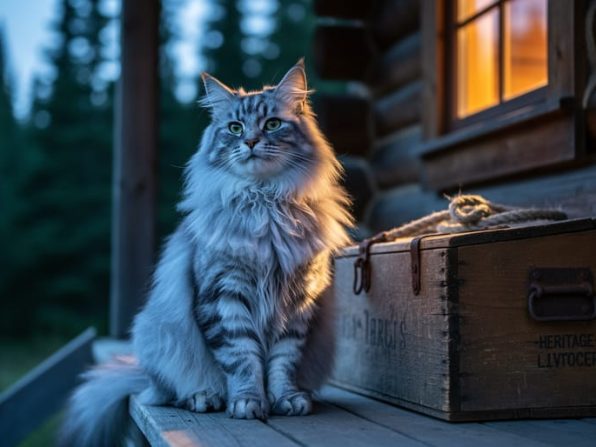
Unusual cat breeds aren’t just quirky pets. They represent living genetic diversity and cultural heritage that deserve the same conservation attention we give to heritage livestock. From the Norwegian Forest Cat that once prowled Viking longships to the LaPerm that emerged from an Oregon barn with unexpected Canadian bloodlines, these rare felines embody centuries of natural selection, geographic isolation, and human partnership across diverse climates and cultures.
Just as what are rare breeds of cattle matter to agricultural biodiversity, rare cat breeds preserve unique genetic traits adapted to specific environments and purposes. The Chartreux developed its dense, water-repellent coat in French monasteries. The Sokoke evolved in Kenya’s coastal forests with a distinctive wood-grain pattern that provided natural camouflage. These breeds carry irreplaceable genetic information about disease resistance, climate adaptation, and behavioral traits that could vanish within a generation without conscious preservation efforts.
For Canadians committed to heritage conservation, supporting rare cat breeds extends our stewardship beyond farm gates. Ontario shelters occasionally offer purebred and rare breed cats, with Toronto Animal Services providing adoptions for $75 (senior cats over eight years are $59). While you won’t always find specific rare breeds in municipal shelters, the growing awareness around feline genetic diversity mirrors the values driving heritage livestock preservation.
This guide spotlights eight genuinely rare cat breeds, each with distinct conservation stories and practical considerations for Canadian households interested in participating in breed preservation through responsible ownership.
Why Rare Cat Breeds Need Our Attention
Rare cat breeds face the same conservation challenges as rare breed conservation efforts for heritage livestock: shrinking gene pools, loss of unique traits, and disappearing historical lineages. When a breed’s population drops below a sustainable threshold, every individual cat carries irreplaceable genetic material. Unlike commercial breeds bred for uniformity, rare cats preserve centuries of natural adaptation and regional selection, much as heritage breeds thrive because they’ve evolved to handle specific environments and roles.
Small breeding populations create a dangerous spiral. Limited numbers mean fewer breeding pairs, which increases inbreeding risk and narrows genetic diversity further. Health problems emerge, fertility drops, and the breed edges toward functional extinction even if a handful of cats technically remain. This genetic bottleneck eliminates traits that might prove valuable later, disease resistance, temperament variations, or physical adaptations we’ve yet to fully understand.
The historical significance runs deeper than novelty. These breeds represent specific human cultures, agricultural traditions, and regional ecosystems. A Norwegian Forest Cat embodies Scandinavian farm life; a Chartreux reflects French monastic self-sufficiency. Losing these breeds erases living connections to how people and animals co-evolved across different landscapes. Every extinct breed removes a chapter from our shared heritage that no amount of historical research can fully recreate.
Supporting rare cat breeds isn’t sentimentality. It’s practical conservation work that protects genetic resources, preserves cultural heritage, and maintains the biological diversity essential for long-term feline health and adaptability.
How We Selected These Breeds
We chose these eight breeds by applying strict conservation-focused criteria that align with heritage animal preservation principles. Each breed meets multiple selection factors: documented small breeding populations globally, limited presence among Canadian breeders and catteries, significant historical or cultural heritage that deserves preservation, and distinctive genetic traits that contribute to feline biodiversity.
We prioritized breeds facing genuine conservation challenges rather than simply uncommon varieties. This means breeds with fewer active breeding programs, shrinking genetic pools, or at-risk heritage status received priority consideration.
Practical accessibility mattered too. While these breeds are rare, we confirmed that Canadians can support their preservation through available channels. Some appear occasionally in adoption programs, Toronto Animal Services, for instance, offers special breed adoptions at a $300 fee when rare breeds enter their system. Others connect to small networks of dedicated Canadian breeders committed to ethical preservation breeding.
We excluded extremely rare breeds with no realistic Canadian access, focusing instead on breeds where your adoption or breeding support can make a tangible conservation difference. Each selection represents both a preservation need and an actionable opportunity for Canadians to participate in rare breed stewardship.
1. Norwegian Forest Cat: The Hardy Northern Hunter
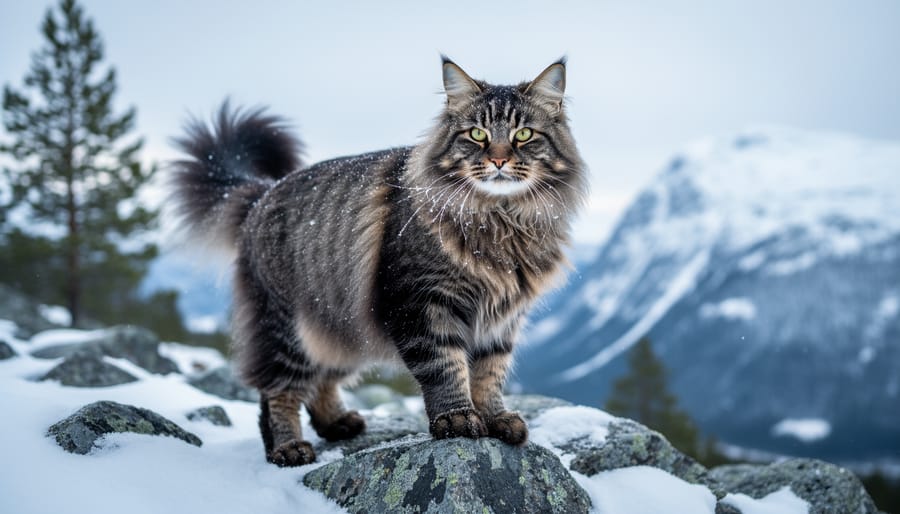
The Norwegian Forest Cat emerged from Scandinavia’s harsh climate as a natural survivor, developed over centuries on Norwegian farms where it earned its keep hunting rodents in barns and weathering brutal winters. This breed’s double-layered coat, water-resistant outer fur, and tufted ears aren’t show ring affectations but genuine adaptations for sub-zero temperatures and wet conditions. Norwegian farmers valued these cats for their independence and hunting prowess, qualities that remain embedded in the breed today.
Despite its robust nature and historical significance, the Norwegian Forest Cat maintains a relatively small presence in Canada, making it one of the rarer heritage breeds worth preserving. The breed nearly disappeared in the mid-20th century before Norwegian breeders launched conservation efforts to save this piece of Scandinavian agricultural heritage. Today, maintaining breeding populations outside Norway helps protect the genetic diversity that defines these naturally adapted cats.
For Canadians seeking a cat that thrives in our climate without extensive human intervention, the Norwegian Forest Cat offers an appealing option. These large, muscular cats retain their working breed instincts, preferring homes where they can exercise their climbing and hunting behaviours. In Ontario, prospective adopters have occasionally found Norwegian Forest Cats through general adoption programs, though availability remains limited. Those interested in adopting a rare breed like the Norwegian Forest Cat through programs such as Toronto Animal Services should expect the Special Breed adoption fee of $300, reflecting both the rarity and conservation value of maintaining these heritage genetics in Canadian populations.
2. Turkish Angora: Living Heritage from Ancient Anatolia
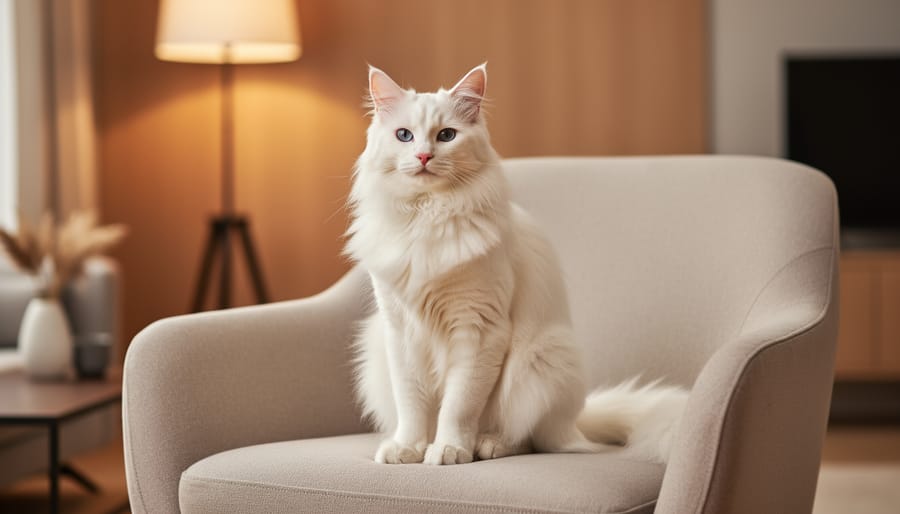
The Turkish Angora traces its origins to the central plateau of Turkey, where it developed naturally over centuries in the harsh Anatolian climate. By the early 20th century, the breed faced near-extinction in its homeland, prompting the Ankara Zoo to establish a conservation breeding program that preserved the pure white bloodline prized by Turkish culture. This intervention saved the breed from disappearing entirely, though global populations remain small today.
The breed’s distinctive characteristics include a fine, silky coat that lacks an undercoat, making it surprisingly low-maintenance despite its luxurious appearance. Turkish Angoras possess an elegant, athletic build and display remarkable intelligence and social engagement with their human companions. Their coat comes in multiple colours beyond the famous white, though the white variety with odd-coloured eyes holds special cultural significance in Turkey as a national treasure.
Maintaining the Turkish Angora supports genetic diversity in domestic cat populations by preserving naturally evolved traits developed through centuries of adaptation rather than selective breeding for specific aesthetic features. The breed represents living genetic heritage from ancient Anatolia, carrying unique alleles that could prove valuable for future breeding programs or health research. Each Turkish Angora maintained through responsible breeding or adoption helps protect this genetic reservoir against the homogenization that occurs when only popular breeds dominate the domestic cat population.
The breed’s conservation status mirrors challenges faced by heritage livestock breeds, small breeding populations, limited geographic distribution, and competition from more commercially popular alternatives.
3. Chartreux: France’s Monastic Mouser
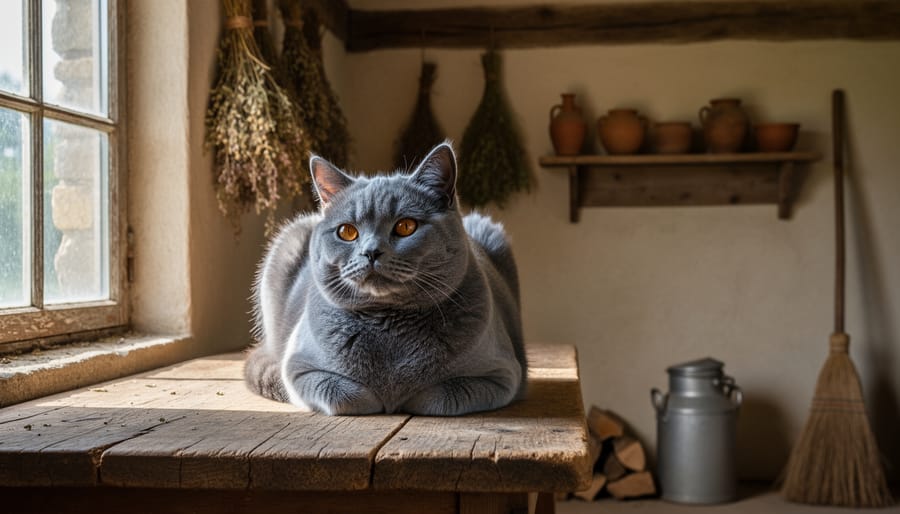
The Chartreux emerged from the Carthusian monasteries of southeastern France, where monks valued cats that could protect their grain stores and libraries from rodents without disturbing the order’s vow of silence. This breed’s naturally quiet disposition made it the ideal working companion in contemplative religious settings. Historical records suggest Chartreux cats worked alongside monks for centuries, developing their distinctive traits through natural selection in agricultural environments where efficiency and independence mattered more than appearance.
The breed nearly vanished after the French Revolution disrupted monastic life and World War II devastated European cat populations. Dedicated French breeders worked to restore the Chartreux from a handful of survivors, making today’s population a successful but still limited conservation effort. The breed’s woolly, water-repellent blue-gray coat and copper or gold eyes reflect adaptations to the cool, damp climate of French monastery courtyards.
Chartreux cats retain their working heritage through strong hunting instincts and problem-solving abilities. They’re notably quiet, often chirping rather than meowing, and they form devoted bonds with their households without demanding constant attention. These muscular, medium-to-large cats mature slowly, reaching full development around three to five years.
The limited global breeding population makes each Chartreux a living link to French agricultural heritage. Like heritage livestock breeds that served specific farm roles, the Chartreux represents purposeful breeding for working traits rather than ornamental features. Supporting this breed through adoption or responsible breeding preserves genetic diversity while honoring the practical partnership between humans and working animals that shaped rural life across cultures.
4. Korat: Thailand’s Silver-Blue Treasure
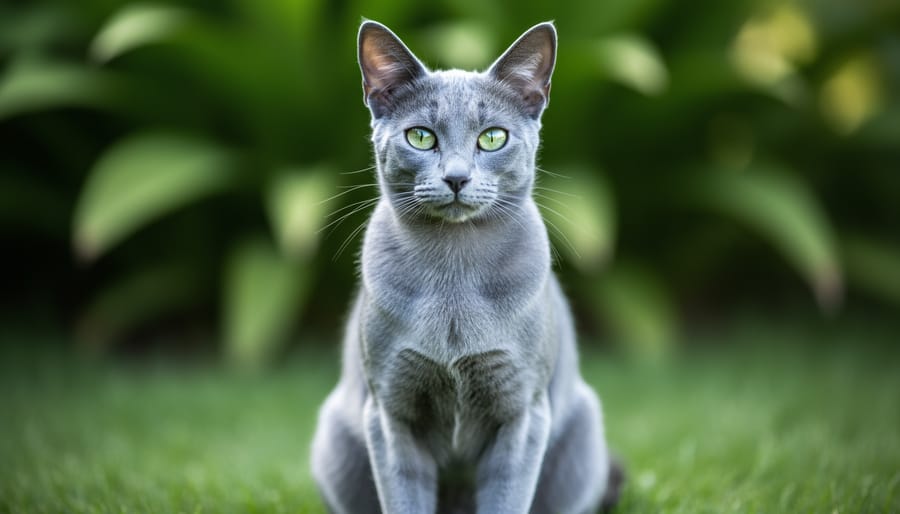
The Korat stands apart as one of Thailand’s most treasured natural cat breeds, documented in the Tamra Maew (Cat Book Poems) dating back to the Ayutthaya Kingdom period between 1350 and 1767. Unlike many modern breeds created through selective breeding programs, the Korat evolved naturally in Thailand’s Nakhon Ratchasima province, where locals still consider these silver-blue cats symbols of good fortune and prosperity.
What makes the Korat particularly significant for genetic diversity is its remarkably stable gene pool. These cats breed true for their distinctive characteristics: the silver-blue coat with no shading or tabby markings, heart-shaped face, and luminous green eyes that develop as the cat matures. This genetic consistency without human intervention represents exactly the kind of natural heritage worth preserving, much like indigenous livestock breeds that adapted to specific environments over centuries.
The global Korat population remains critically small. Most breeding programs operate in Thailand, the United States, and parts of Europe, with very limited representation in Canada. This scarcity matters because the Korat carries unique genetic markers not found in other blue-coated breeds like the Russian Blue or Chartreux. Losing this breed would mean losing an irreplaceable part of feline genetic heritage.
Beyond genetics, the Korat embodies cultural history. In Thailand, giving a Korat to a bride remains a traditional wedding blessing. Preserving these cats means preserving living connections to agricultural communities that valued working animals for both practical purposes and cultural significance.
5. LaPerm: The Unexpected Canadian Connection
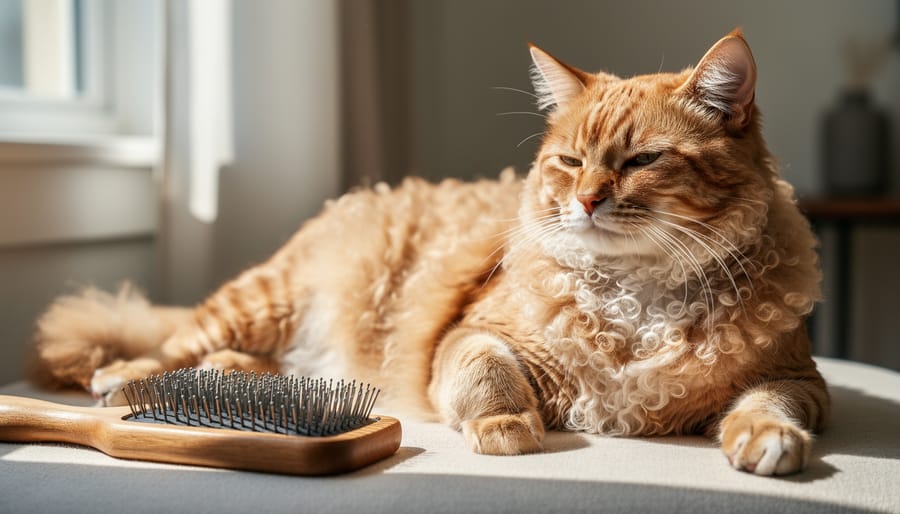
The LaPerm’s story begins not with calculated breeding programs, but with a single curly-coated kitten born on an Oregon cherry farm in 1982. This spontaneous genetic mutation, a natural occurrence rather than human intervention, produced a coat unlike any other domestic cat. The breed carries particular significance for North American heritage precisely because it emerged organically from the continent’s working farm cat population, demonstrating how genetic diversity manifests naturally when animal populations remain genetically robust.
Unlike carefully engineered breeds, the LaPerm’s distinctive curly coat resulted from a dominant mutation affecting hair shaft formation. Each cat carries unique curl patterns ranging from tight ringlets to loose waves, with some individuals born straight-coated before developing curls as they mature. This natural variation within the breed exemplifies why maintaining diverse genetic lines matters: the LaPerm gene pool preserves evolutionary adaptability rather than selecting for a single standardized appearance.
The breed’s population remains critically small worldwide. Few Canadian breeders work with LaPerms, and finding one through adoption channels requires patience and often participation in breed-specific networks. Some may appear through Toronto Animal Services’ special breed program at the $300 fee tier, though availability fluctuates significantly. The scarcity isn’t just about numbers, it’s about preserving a spontaneous genetic event that enriched domestic cat diversity. Every LaPerm maintains living evidence of natural mutation’s role in species adaptation, making the breed’s conservation valuable beyond its undeniably charming appearance.
6. Egyptian Mau: The Spotted Ancient
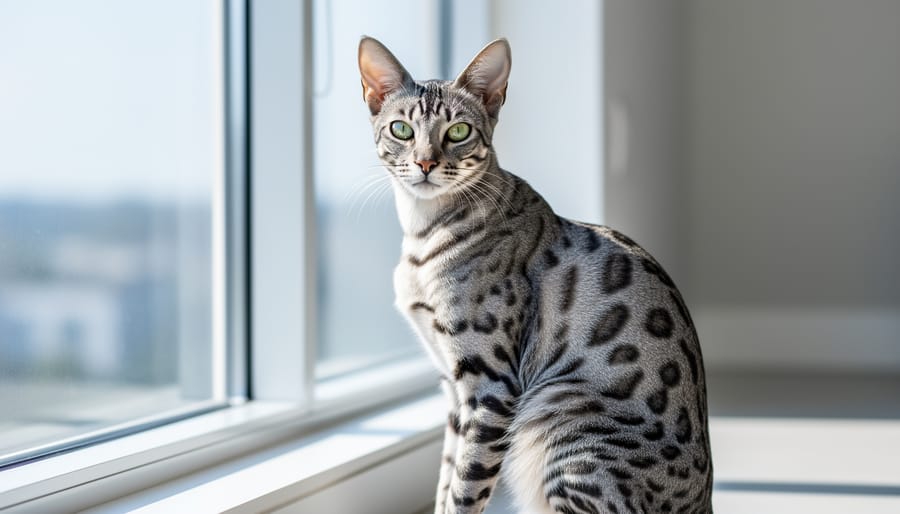
The Egyptian Mau stands as one of domestic cat history’s most authentic links to ancient Egypt, bearing a naturally occurring spotted coat that distinguishes it from breeds whose patterns emerged through selective breeding. Unlike created spot patterns, the Mau’s rosettes and spots developed through natural selection over millennia, making this breed a living genetic library of feline coat variation that predates human intervention.
These silver-to-bronze cats carry distinctive gooseberry-green eyes and a small, dark dorsal stripe running from head to tail, markings remarkably similar to those depicted in ancient Egyptian art. What makes the Mau particularly valuable from a conservation perspective is its status as one of fewer than ten naturally spotted domestic cat breeds worldwide. Most spotted cats today result from deliberate breeding programs, but the Mau’s pattern arose organically in North African street cat populations.
The global breeding population remains limited, with fewer registered breeders maintaining lines than many popular breeds. This scarcity creates genetic bottleneck risks similar to those affecting heritage livestock: when breeding populations shrink, harmful recessive traits can concentrate while beneficial genetic diversity disappears. Every Egyptian Mau kitten born to careful breeders helps maintain variation within this ancient gene pool.
For Canadians interested in supporting this breed, adoption through programs like those at Toronto Animal Services, where special breed cats are available for a $300 adoption fee, offers a conservation-minded alternative to overseas purchases. Preserving the Mau means protecting authentic natural spotting genetics that can’t be recreated once lost.
7. Sokoke: East Africa’s Forest Cat
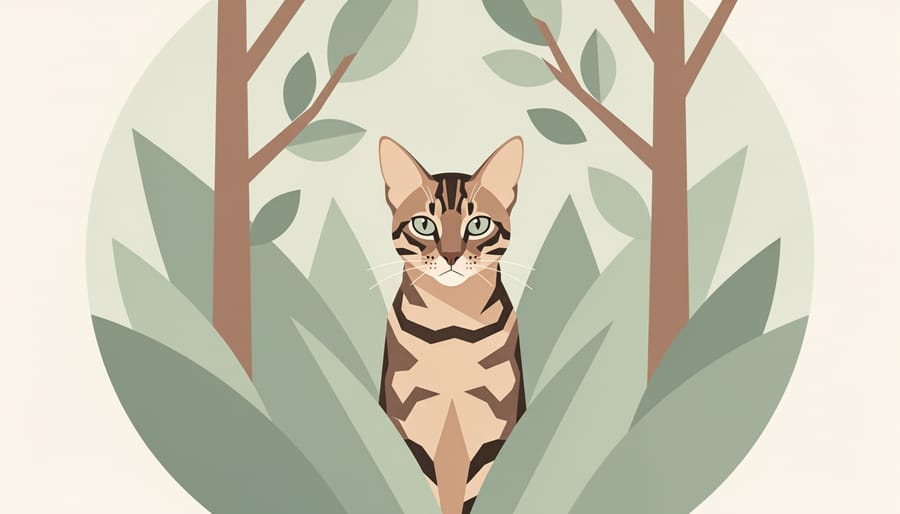
The Sokoke stands apart as one of the world’s rarest cat breeds, emerging naturally from the Arabuko-Sokoke Forest along Kenya’s coastal region. Unlike deliberately bred varieties, this breed developed without human intervention, adapting to its forest environment over generations. That natural evolution makes the Sokoke particularly valuable for genetic diversity conservation, it represents an independent domestication pathway that occurred in East Africa rather than the typical Mediterranean or Asian origins of most domestic cats.
The breed’s distinctive tabby pattern, called “modified classic tabby,” shows a marbled appearance unique among domesticated cats. Sokokes possess a lean, athletic build suited to their forest-dwelling ancestors, with long legs, a short coat, and large ears that evolved for hunting in dense vegetation. These aren’t cosmetic features bred for appearance, they’re functional adaptations that developed through natural selection in a specific ecological niche.
The Sokoke’s global breeding population remains extremely small, with estimates suggesting fewer than 100 registered breeding individuals worldwide. This tiny gene pool makes every breeding decision critical for the breed’s survival. In Canada, where conservation of heritage livestock already connects people to genetic preservation principles, the Sokoke exemplifies why naturally evolved breeds deserve protection. These cats carry genetic variations shaped by their environment rather than human preferences, offering biological diversity that could prove valuable for the broader domestic cat population.
Preserving naturally occurring breeds like the Sokoke parallels conserving heritage agricultural animals, both protect genetic resources developed through real-world adaptation rather than selective breeding for market demands.
8. American Wirehair: The Distinctive North American Mutation
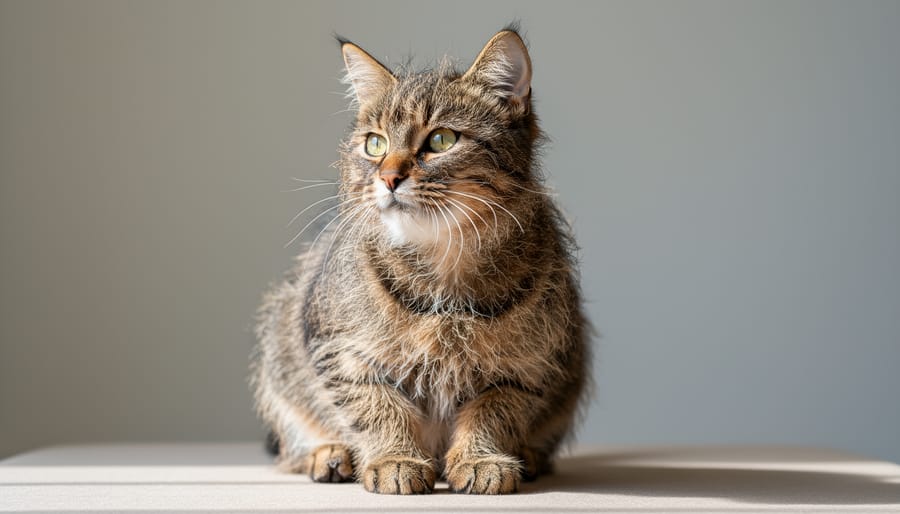
The American Wirehair stands out as one of North America’s rarest breeds, born from a spontaneous genetic mutation in upstate New York in 1966. When a wire-coated kitten appeared in a barn litter, breeders recognized the unique mutation’s value and began careful preservation efforts. The breed’s distinctive crimped, springy coat results from a dominant gene affecting hair shaft structure, creating a texture unlike any other cat.
Despite its North American origins, the American Wirehair remains extraordinarily rare even in its homeland. Breeding populations stay critically small, with fewer registered cats annually than most heritage livestock breeds. This scarcity makes every healthy individual vital to maintaining the mutation’s genetic legacy.
The breed’s value extends beyond novelty. As a naturally occurring mutation, the American Wirehair represents irreplaceable genetic diversity within domestic cats. Its spontaneous origin mirrors the adaptive variations that emerge in heritage livestock populations, demonstrating how genetic variation arises and persists. Losing such mutations narrows the overall gene pool for domestic cats.
Canadian adopters interested in rare breeds should understand that finding an American Wirehair requires patience and often higher fees. Special breed adoption programs typically charge $300, reflecting the rarity and specialized care these cats need. The breed qualifies for consideration under endangered species programs that support heritage animal conservation, connecting cat preservation to broader biodiversity efforts.
Supporting Rare Cat Breeds in Canada: Practical Steps
Canadians who want to support rare breed conservation have several meaningful ways to contribute while bringing one of these distinctive cats into their home. The most direct path is adoption through municipal programs like Toronto Animal Services, which lists available cats including occasional rare breeds for a standard $75 adoption fee, while designated Special Breed adoptions carry a $300 fee that reflects the conservation value of these uncommon felines. Senior cats over eight years are available for $59, and these older cats often need homes just as much as younger animals while requiring less adjustment time.
Beyond adoption, connecting with reputable breeders who prioritize genetic diversity over appearance trends supports sustainable breeding programs. Look for breeders who health-test their cats, maintain detailed lineage records, and participate in breed preservation networks rather than producing for profit alone. These breeders often have waiting lists, which reflects responsible breeding practices that prevent overproduction.
- Adopt through municipal shelter special breed programs or contact breed-specific rescue networks
- Connect with registered breeders who participate in conservation breeding programs and maintain genetic records
- Consider senior or adult cats, which face longer shelter stays but adapt quickly to new homes
- Join online communities dedicated to specific rare breeds to share knowledge and connect with other stewards
- Support breed clubs that fund genetic research and maintain breed registries
This approach mirrors the sustainable stewardship principles applied to heritage livestock: responsible breeding, informed ownership, and long-term commitment to maintaining healthy populations. Whether you adopt a Norwegian Forest Cat from an Ontario shelter or wait for a Korat kitten from a conservation-minded breeder, you’re participating in preserving these living links to feline history while gaining a remarkable companion.
What You Need to Know About Rare Cat Breed Adoption
How much does it cost to adopt a rare cat breed in Canada?
Adoption fees vary by shelter. Toronto Animal Services charges $75 for standard adoptions and $300 for special breeds, while senior cats over eight years cost $59. Purchasing from a breeder typically costs more but supports dedicated preservation programs.
Can I find rare breeds like the Norwegian Forest Cat through Canadian shelters?
While most shelters focus on common domestic cats, some rare breeds do appear. Norwegian Forest Cats and other heritage breeds occasionally become available through shelters and breed-specific rescue networks, though patience is often required.
What makes rare cat breeds different from common domestic cats?
Rare breeds maintain distinct genetic traits shaped by specific geographic origins and historical purposes. Their preservation protects valuable genetic diversity, much like heritage livestock conservation protects agricultural biodiversity.
Why does rare cat breed conservation matter?
Maintaining diverse cat breeds preserves centuries of genetic adaptation and cultural heritage. Small breeding populations face the same conservation challenges as heritage livestock, making responsible stewardship essential for maintaining healthy, genetically diverse populations for future generations.
When you commit to a rare breed, you’re stepping into a preservation role similar to heritage livestock stewardship. These cats often carry specific care considerations tied to their natural characteristics. The Turkish Angora’s fine coat requires different grooming than a Norwegian Forest Cat’s water-resistant double coat. Understanding these breed-specific needs before adoption ensures you can provide appropriate care while supporting conservation efforts. Connect with breed clubs and experienced owners who can share practical guidance rooted in preserving these living pieces of heritage rather than simply owning an unusual pet.
Preserving rare cat breeds isn’t separate from heritage livestock conservation, it’s part of the same essential work. Just as heritage cattle, sheep and poultry maintain genetic diversity and cultural history, every rare breed cat contributes irreplaceable traits to the domestic cat gene pool. When you choose a Norwegian Forest Cat from an Ontario adoption program or support a responsible breeder of American Wirehairs, you’re participating in the same stewardship that keeps Canadian agricultural heritage alive.
The breeds profiled here face challenges similar to those confronting heritage livestock: small populations, limited geographic distribution, and the risk that current popularity trends could erase centuries of natural selection. Your decision matters. Whether you’re adopting a senior Chartreux for $59 or investing in a special breed at $300, you’re casting a vote for diversity over homogenization.
Connect with breed communities, ask questions about lineage and health, and approach rare breed stewardship as a long-term commitment rather than a novelty. These cats carry forward stories of Scandinavian forests, French monasteries and Kenyan coasts. They deserve the same thoughtful conservation we apply to every heritage animal that enriches Canadian farms and homes.